 YAPPIE
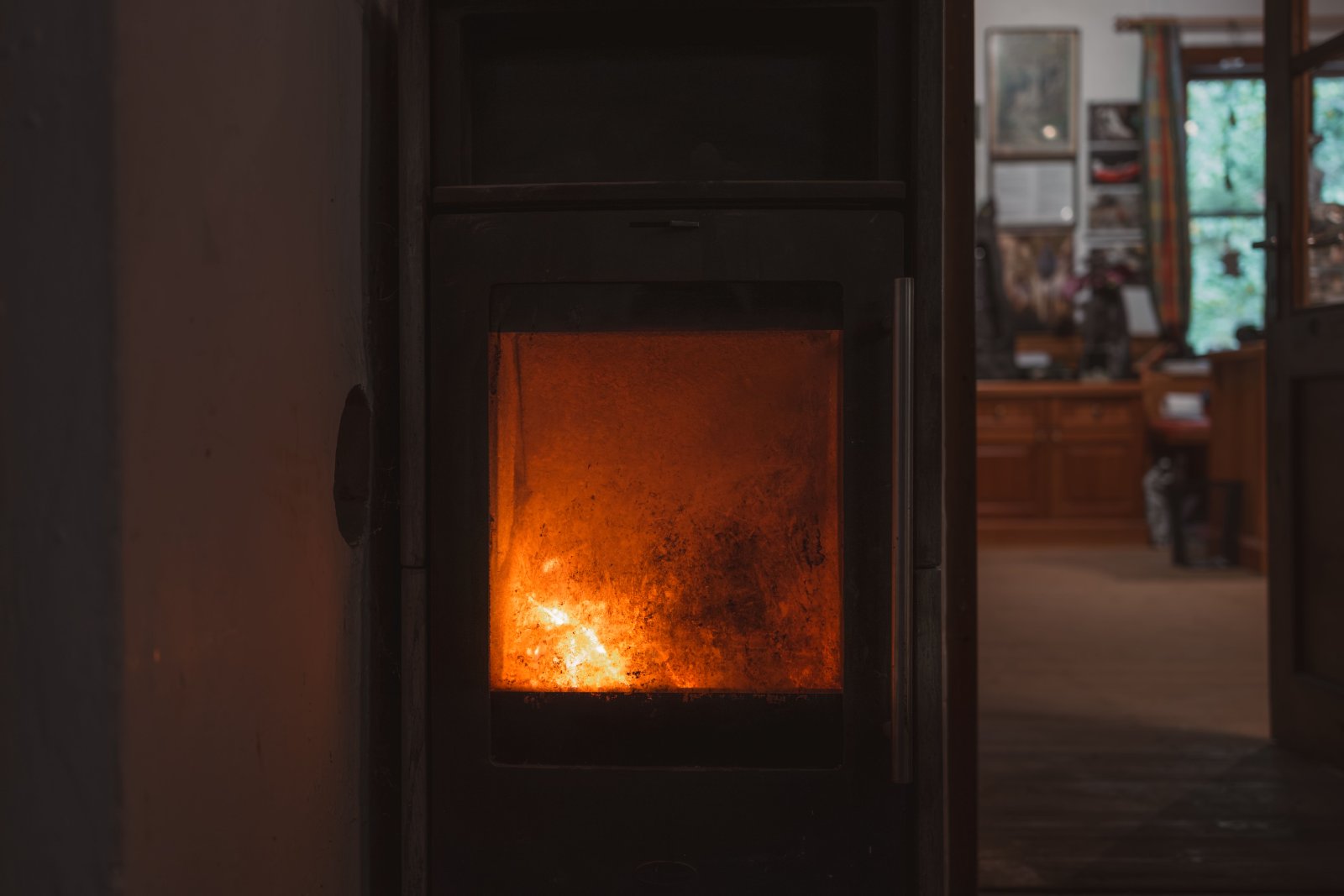
Pellet equipment is considered a way to move away from dependence on gas, and there is some sense in this, but before purchasing, it is worth understanding two things. The first is the difference between a stove and a boiler, since these are different devices for different tasks. The second is the fact that neither of them works without electricity, and this is what people most often find out only after installation.
A Stove and a Boiler Are Not Synonyms
A pellet stove is installed directly in the room and heats the air around it, meaning it works as a modern equivalent of a traditional wood-burning stove. It heats the room in which it is located and partially the neighboring rooms if there is airflow. There are models with a water circuit that additionally heat water for radiators, and they occupy an intermediate position between a stove and a boiler.
A pellet boiler is installed in a separate room, meaning in a boiler room or basement, and heats water for the heating system of the entire house. The practical conclusion is as follows. If you need to heat one or two rooms or a summer house, a stove is suitable. If we are talking about full heating of a house with radiators, a boiler or a stove with a water circuit is needed. Replacing a gas boiler with a simple pellet stove without a circuit does not solve the task of heating the entire house.
The Main Nuance You Should Know in Advance
Pellet equipment is not completely autonomous, since it requires electricity. Power is needed for the auger, which feeds pellets from the hopper into the burner, for the air supply fan, and for the control electronics. Models with electric ignition additionally consume power through the ignition element at the moment of startup. Consumption is low, and in operating mode it is measured in tens of watts, while the peak value during ignition is several hundred watts. Exact figures depend on the model, so they should be checked in the specifications of the specific device. The practical conclusion turns out to be pleasant. Since consumption is low, even a portable power station with a modest capacity can keep such a stove running for many hours, while a small uninterruptible power supply covers the issue of short outages. This fundamentally distinguishes pellet equipment from electric heating, which makes no sense to power from a station. Sellers themselves recommend providing backup power, noting that this problem applies equally to both conventional and pellet equipment. That is, in combination with a portable power station, a pellet stove becomes one of the few ways to have heat during prolonged outages.
How Many Pellets Are Needed
Heat loss in the premises is taken as a guideline, and for a residential house at a constantly low outdoor temperature, it is approximately one hundred watts per square meter. Averaged over the entire season, this figure is approximately twice as low, meaning about fifty watts per square meter.
According to practical data, consumption is approximately zero point twenty-eight kilograms of pellets per day for each square meter during the cold period. For a house with an area of one hundred square meters, this gives approximately twenty-eight kilograms per day in freezing weather, meaning about eight hundred kilograms per month. It is worth understanding that this figure is calculated with a reserve or for a poorly insulated house, while in reality it is usually lower over the season, since severe frosts do not last throughout the entire season. As a guideline, the annual heat consumption of a house with an area of one hundred square meters is estimated at approximately twenty-three thousand kilowatt-hours. Calculate your own requirement according to this scheme and multiply it by the current price of pellets to get the cost of the season.
What Affects Consumption
The quality of insulation of the walls, roof, floor, and windows has the strongest effect of all, and a house without insulation will consume twice as much fuel for the same result. The temperature you maintain in the rooms noticeably changes consumption, since every additional degree costs fuel. The quality of the pellets themselves matters more than it may seem, and this is discussed separately below. The efficiency of the specific device differs between models.
About Pellet Quality
This is the most common cause of disappointment with pellet heating. Cheap pellets with high ash content produce more ash, which has to be removed much more often, and when sintering, they form slag that clogs the burner. Moist raw material reduces heating value, meaning you burn more for the same result. An unsuitable pellet diameter creates problems for automatic feeding systems, since they are designed for a specific size, usually four, six, eight, or ten millimeters. The practical advice is not to immediately purchase a large batch from an unfamiliar supplier, but first take a small quantity and test it in operation.
What Is Needed Besides the Stove Itself
Chimney. This is a mandatory requirement, and it is precisely what makes a pellet stove unsuitable for an ordinary apartment. The manufacturer specifies the requirements for the chimney, and you cannot save money on it.
A place to store the fuel. Pellets are afraid of moisture, so a dry room is required. As a guideline, one ton of pellets occupies approximately one and a half cubic meters, and the seasonal supply for an average house is measured in several tons.
Space for the device itself together with the hopper, since the unit with the hopper takes up quite a lot of space.
Regular maintenance, meaning removing ash and cleaning the heat exchanger according to the manufacturer's schedule.
About Safety
Pellet equipment burns fuel, and therefore produces carbon monoxide, which is removed through the chimney. A faulty or clogged chimney turns this into a direct threat to life, since carbon monoxide has no smell, color, or taste. Therefore, installation must be carried out by a specialist, the chimney must be cleaned regularly, and a carbon monoxide detector in a house with any solid-fuel equipment is not an additional option, but a necessity.
Who Is It Suitable For
Owners of private houses with the ability to install a chimney and store fuel. Those looking for independence from gas and ready for regular maintenance. Those who have or are planning backup power, since without it the stove will stop together with the electricity. It is not suitable for apartments because of the inability to install a chimney, as well as for those who are not ready for daily fuel-loading activities and periodic cleaning.
Sources
Publications by Otivent, TeploReaL, Teplozakhid, BioEnergoBank, materials from heating equipment sellers