 YAPPIE
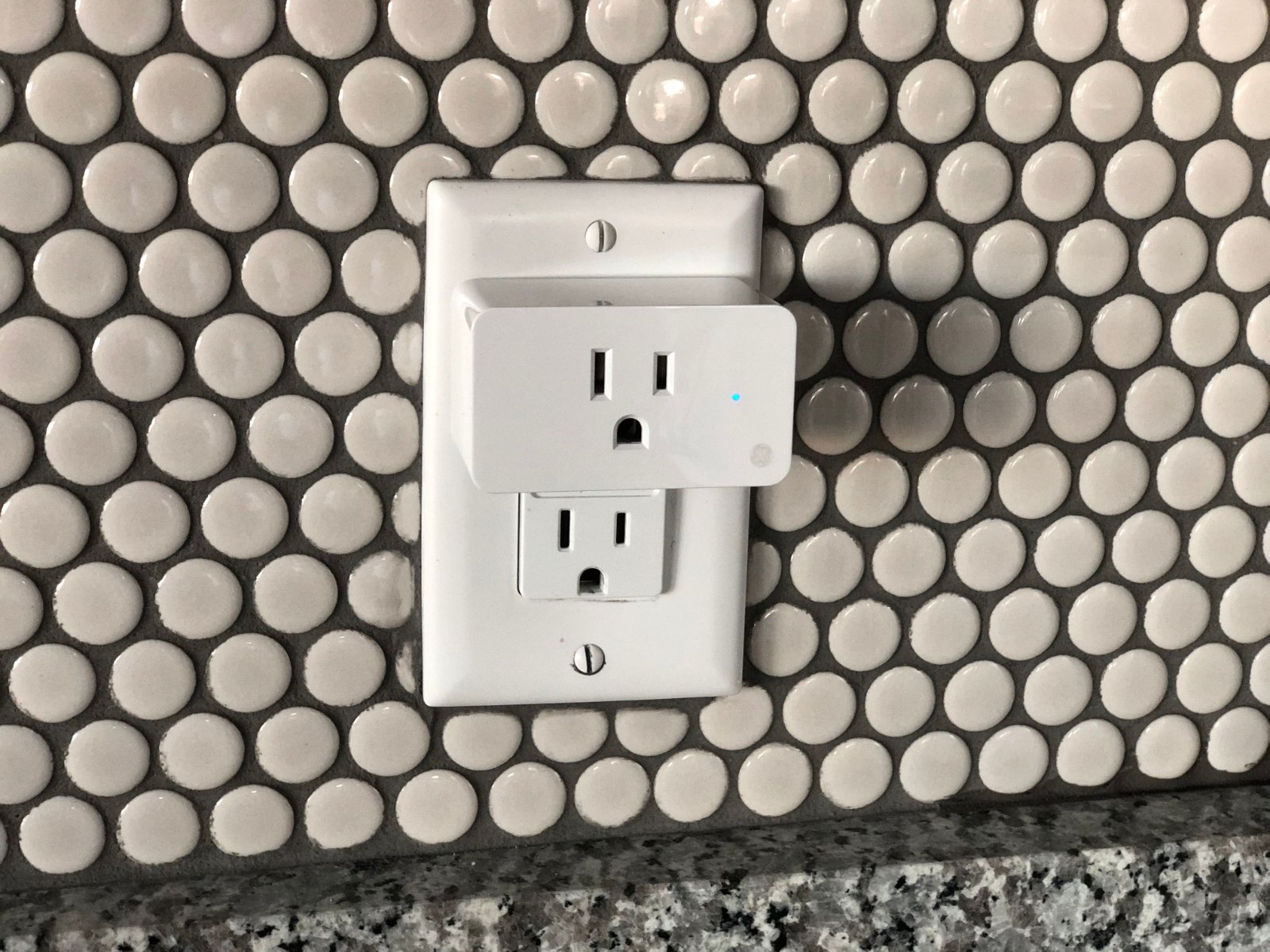
Before talking about savings, it is worth clearing up one question, because for a significant number of people the answer to it closes the topic completely. A smart plug only controls what is plugged into the socket. If you have central heating with radiators, it will not affect it in any way, because the radiators are not connected to the socket. There is another tool for them, namely thermostatic radiator heads, and I wrote about them in the material about heating bills. Therefore, the discussion below concerns exclusively electrical equipment, that is, heaters, water heaters, underfloor heating and similar appliances.
What it actually does
Here it is worth getting rid of the second illusion. A smart plug does not reduce an appliance's consumption. A two-kilowatt heater consumes two kilowatts regardless of what it is switched through. Savings arise from two things, and only from them. The first is that the appliance operates for fewer hours because it is switched on only when needed. The second is that it operates when electricity is cheaper, that is, at the night-time tariff. Everything else that is written about savings from smart plugs is derived from these two mechanisms.
Where the money actually lies
The biggest effect comes not from a heater, but from a water heater, and this is exactly the scenario that all sellers call the main one, and this time they are right. The logic looks like this. A water heater heats water and then maintains its temperature throughout the day. It does not matter to it exactly when the main heating takes place, so it can be completely shifted to night-time hours. With a two-zone meter, the night-time tariff is approximately twice as low as the daytime tariff, and the difference is about two hryvnias per kilowatt-hour. Let us calculate approximately. A family of three people uses approximately three kilowatt-hours per day to heat water. Shifting this amount to the night-time tariff gives savings of about six hryvnias per day, that is, approximately two thousand hryvnias per year. A smart plug with a timer costs hundreds of hryvnias, so the payback period here is measured in months, and this is that rare case when the calculation really works in favor of the purchase. An important condition is the presence of a two-zone meter, because without it this scenario provides nothing.
The second scenario, that is, a heater on a schedule
Here the savings arise by reducing the hours of operation. A typical situation looks like this. The heater operates all day while nobody is home, because turning it on in advance is more convenient than being cold after returning. A timer solves this differently, meaning the appliance turns on half an hour before you return and turns off after you leave. If a one-and-a-half-kilowatt heater operated for an extra eight hours per day, that is twelve kilowatt-hours, meaning more than fifty hryvnias every day at the current tariff. There is a significant technical caveat here, discussed below, because combining a timer with a heater has its own peculiarities.
The third scenario, the most underestimated
Many modern smart plugs have a built-in consumption meter, and it is precisely this function that often provides more value than the timer itself. The reason is simple. Until you see the numbers, you operate with assumptions. When the app shows that a specific appliance consumed a certain number of kilowatt-hours per month, the picture becomes concrete. In practice, people regularly discover that they significantly overestimated the consumption of some appliances and underestimated that of others, and after that, decisions about what to turn off are made based on facts. I wrote about the formula for converting consumption into money in the material about electricity, and together with a consumption meter in the plug, it provides the complete picture.
Honestly about standby consumption
Sellers often make an argument about appliances in standby mode, that is, chargers, televisions and equipment that consume energy constantly. Let us calculate, because the argument looks convincing only without numbers. A charger without a connected device consumes fractions of a watt, meaning that over a year this amounts to several kilowatt-hours and approximately a dozen hryvnias. A television or set-top box in standby mode consumes from one to several watts, which over a year gives several dozen kilowatt-hours and one or two hundred hryvnias. In total, all standby consumption in an apartment usually amounts to between one hundred and three hundred hryvnias per year. That is, it is worth turning this off, but the payback period of a smart plug specifically for this scenario stretches over years, and presenting it as the main argument is incorrect. The real money lies in the water heater and in reducing the operating hours of powerful appliances.
Safety, and this is the most important section
Here direct language is needed, because this is precisely where people create a problem for themselves instead of saving money.
A heater is one of the most powerful household appliances, and the smart plug must be designed for this load with a margin. Plugs can be rated at ten amps, which corresponds to approximately two thousand two hundred watts, and at sixteen amps, that is approximately three and a half thousand watts. There are also models rated at twenty amps. A two-thousand-watt heater connected through a ten-amp plug operates practically at the limit of its capabilities. The contacts heat up in this mode, oxidize over time, resistance increases, and this is a direct path to melting the housing. Therefore, for a heater, water heater, and any powerful appliance, choose a plug rated at least sixteen amps and check the stated power in the specifications, not just the appearance. The second rule is no less important. Do not connect a powerful appliance through a chain consisting of an extension cord, a power splitter, and a smart plug. Every additional connection is a point where heat can build up, and extension cords are often designed for lower power than you might think. The third rule concerns the wall socket itself, because an old or loose socket with poor contact heats up even without smart devices.
If, after several hours of operation, the body of the smart plug is noticeably warm, this is a signal that the load is too high for it.
About combining a timer with a heater
There is a technical feature here that is worth understanding. A timer does not know the temperature in the room. It only turns the power on and off according to a schedule. Because of this, a heater without its own thermostat, connected through a timer, will overheat the room in warm weather and will not have time to heat it in freezing weather. The correct setup looks different. The heater has its own thermostat, which maintains the set temperature, while the smart plug with a timer determines only the period during which the heater is allowed to operate at all. That is, the thermostat is responsible for the temperature, while the timer is responsible for the schedule, and together they work much better than either one separately.
Types of smart plugs
Mechanical timers are the cheapest and simplest. The schedule is set using segments on a dial, they require neither the internet nor settings, and they operate autonomously. The disadvantages are usually a schedule step of fifteen minutes and the fact that the clock is reset after a power outage if the model does not have a backup element. Electronic timers allow you to set a schedule with accuracy down to the minute and distinguish between days of the week. Many models have a backup battery that preserves the settings for more than one hundred hours without power, and this is a significant advantage under blackout conditions. Smart plugs with network connectivity add remote control, consumption measurement, scenarios, and integration with voice assistants. They are also the most expensive and depend on the operation of the home network. Among smart plugs, it is worth distinguishing between devices that operate via Wi-Fi and those that operate via the Zigbee protocol. The latter require a separate coordinator, but place less load on the home network and are usually more stable when there are a large number of devices. I wrote about the difference between the protocols in the material about the smart home.
What happens during a power outage
This is the part that is rarely mentioned in product descriptions, while in our conditions it is critical. A smart plug controlled via the internet does not respond during a power outage because there is neither power nor a router. Scheduled scenarios, however, are stored in the device itself in many models and continue to be executed after power is restored. Much more important is something else, namely what state the plug will be in after the power returns. High-quality models allow this to be configured, meaning you can choose whether the plug turns on automatically, remains switched off, or returns to its previous state. For a heater, the correct setting is to remain switched off, because otherwise the appliance will turn on by itself at three in the morning without your knowledge. For a water heater, on the contrary, returning to the previous state is often more convenient. Check for this option before buying, because cheap models may not have it at all.
What to look for when buying
Maximum load in amps and watts, with a margin relative to your appliance. The presence of consumption measurement if you want to see the actual numbers. The ability to configure behavior after power is restored. Backup power for the memory in electronic models. The number of programs and the schedule step. The type of control, meaning whether you need remote access or whether a local timer is sufficient. The size of the housing, because bulky models block the adjacent socket in a double outlet.
Sources
Data from Rozetka, Prom, Maudau, Exmart regarding the characteristics and load of timer plugs, materials from specialized electrical equipment stores