 YAPPIE
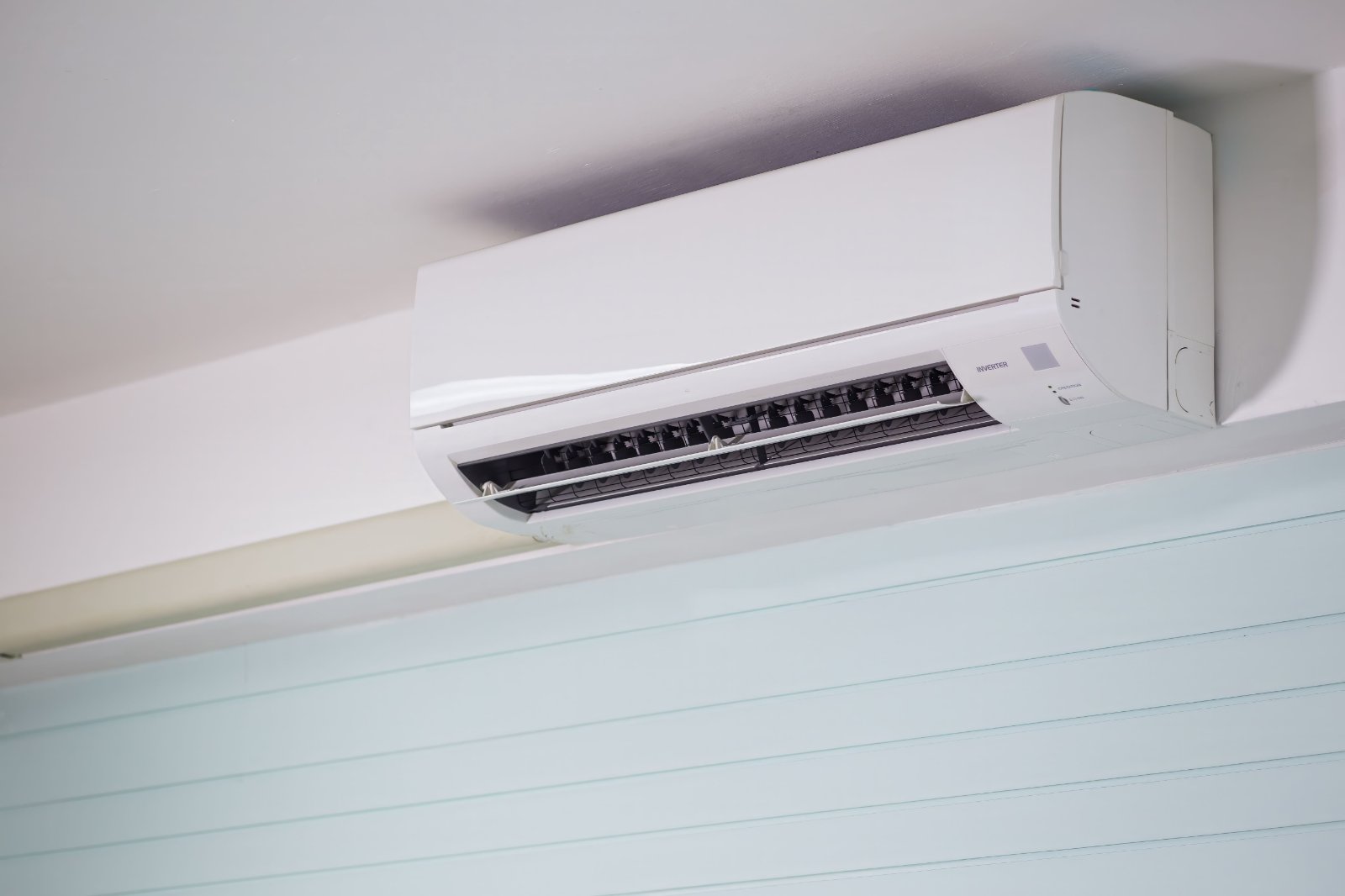
In materials about heaters, I mentioned twice that any electric heater converts a kilowatt of electricity into a kilowatt of heat, and only one category of devices delivers more than it consumes.
This category is an inverter air conditioner in heating mode, and it is worth looking into it in detail, since just as many misunderstandings have accumulated around it as there are advantages.
How an Air Conditioner Can Deliver More Than It Consumes
An air conditioner in heating mode works as an air-to-air heat pump, meaning that it does not produce heat but transfers it from outside into the room. Even freezing air contains thermal energy, and the compressor extracts it and transfers it inside. The difference from a heater is fundamental. A convection heater converts electricity into heat on a one-to-one basis, while an air conditioner spends energy only on the operation of the compressor and fans, while the heat itself is taken from outside. The indicator of this efficiency is called the COP coefficient, and for modern models it is approximately three to four, meaning that from one kilowatt of electricity the device provides three to four kilowatts of heat. This is why at moderate winter temperatures, heating with an air conditioner costs less than any direct electric heating.
Down to What Temperature Does It Work
Here lies the main misunderstanding, and it is that people focus on the word “inverter” rather than on the specific characteristics. The approximate limits look like this. A conventional non-inverter air conditioner heats effectively to approximately minus five degrees. An inverter one works for heating at approximately minus fifteen. Models with compressor and outdoor unit pan heating work down to minus twenty-five, and some even at lower temperatures. But there is no single figure for all air conditioners, and you should rely on the specifications of the specific model, not on the general name of the technology. The technical specifications indicate the operating temperature range specifically for heating mode, and this is the figure that should be checked before purchasing.
What Happens in Severe Frost
Even if an air conditioner formally works at a low temperature, its efficiency does not remain constant. The stronger the frost, the more often the outdoor unit switches to defrost mode, meaning that it temporarily stops heating to remove ice from the heat exchanger.
At the same time, the heating capacity decreases, electricity consumption increases, and the room heats up much more slowly. According to specialists' estimates, as the temperature decreases, consumption increases almost twofold. The practical conclusion is that an air conditioner is a very cost-effective source of heat during the transitional seasons and in moderate frost, but in severe cold it needs a backup source.
The Most Common Myth
A winter kit, which is offered for installation on the outdoor unit, does not make an air conditioner more frost-resistant, and specialists call this the main misunderstanding among owners. This kit has a different purpose, and it is primarily related to the operation of the device in cooling mode during winter, for example in server rooms, rather than heating. That is, if your model is not designed according to its specifications to heat at low temperatures, no additional equipment will change this.
A Limitation Worth Knowing
An air conditioner is a local appliance designed for one room. The heating function is an additional one, and for heating an entire house, air conditioners turn out to be too energy-intensive, since each room requires a separate indoor unit. For an apartment or one or two rooms, this is a perfectly workable solution. For a private house with several floors, it is worth considering full-fledged heat pumps, which are a separate category of equipment.
How to Use It Correctly
Set a moderate temperature, since twenty to twenty-two degrees during the day and eighteen to twenty at night are considered the optimal balance between comfort and savings. Each additional degree costs noticeably more than it seems. Do not switch the air conditioner off completely for a short period, since an inverter device is more economical when maintaining the temperature than when starting up from a cold state. Make sure that the outdoor unit does not become covered with frost and that ice does not accumulate on it.
Clean the filters of the indoor unit regularly, since clogged filters reduce efficiency.
If possible, place the outdoor unit where there is less wind. Close the door to the room you are heating, since the device is designed for a specific area.
What Is Important in Our Conditions
An air conditioner is completely dependent on the power supply, so it does not work during outages.
But there is a detail here that makes it more interesting than an ordinary heater. Thanks to its efficiency coefficient, the energy stored in a portable power station provides several times more heat than the same amount of energy spent on a convection heater. That is, if an ordinary two-kilowatt heater discharges a station in just a few tens of minutes, an air conditioner that consumes significantly less after reaching its operating mode can run from it noticeably longer. At the same time, you need to take into account peak consumption at startup and the fact that the station must provide a pure sine wave, so this scenario should be calculated for a specific model and a specific station, rather than relied upon by default. I wrote separately about calculating the power of a station. In severe frost, when efficiency decreases, this advantage becomes smaller.
Who Is It Suitable For
Owners of apartments where central heating is unstable or insufficient. Those who want to have an addition to their main heating during the transitional seasons, when it has not yet been turned on or has already been switched off.
Those who need an air conditioner in summer as well, since one device covers both tasks. It is not suitable as the only source of heat for a large house in regions with severe frosts without backup heating.
Sources
Publications by UNIAN, Telegraph, OGO.ua, materials from climate equipment manufacturers and specialized installation companies