 YAPPIE
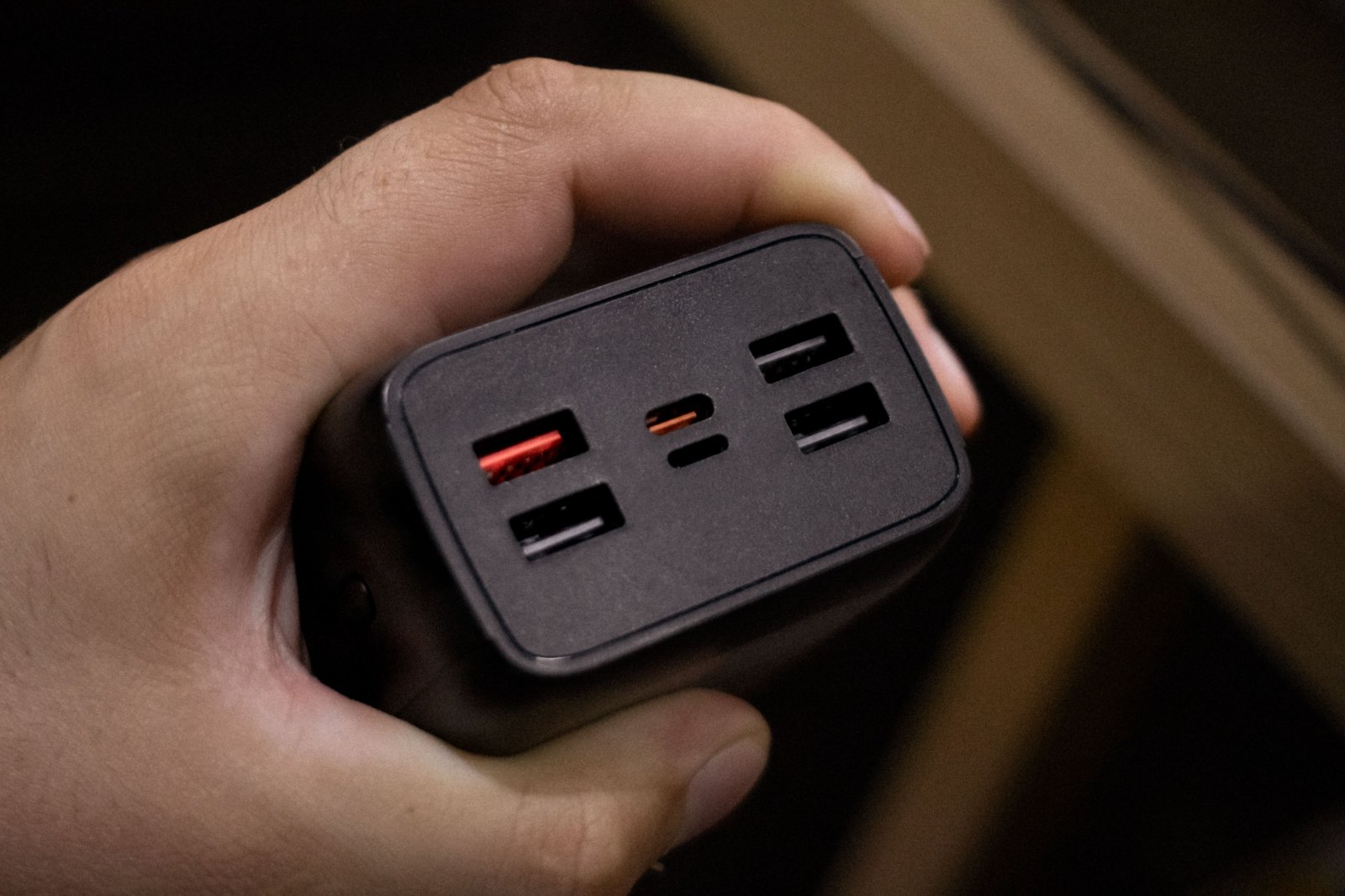
How a Power Bank Behaves in Winter
In winter, a power bank behaves differently than it does in summer, and people usually notice only that it runs out faster. In reality, there are two different problems, and the second one is much more serious because it can damage the device irreversibly.
First Problem: Capacity Drops in the Cold
At sub-zero temperatures, the maximum current that a lithium battery can deliver decreases significantly. The reason is chemical: at low temperatures, processes inside the cell slow down, while internal resistance increases. As a result, the voltage drops under load, and the device may switch off even when the indicator still shows that some charge remains. In practice, this means that a power bank that could charge a phone twice in summer may charge it only once or even less in freezing temperatures.
There is good news, however. This loss is mostly temporary, meaning that after returning to room temperature, the capacity recovers and the device works as before. In other words, cold itself does not necessarily damage a power bank; it simply reduces its capabilities while it remains in freezing conditions.
Second Problem: Charging in the Cold Damages the Battery
This is the most important thing to remember from the entire article. A lithium battery can be discharged and stored at sub-zero temperatures, but it should not be charged while cold.
The reason is that when a cooled cell is charged, lithium does not have enough time to properly integrate into the electrode structure and instead deposits on its surface as metallic lithium. This process is irreversible, meaning that capacity is permanently lost, and over time these deposits can lead to an internal short circuit. Therefore, the main rule is simple: if a power bank has been in the cold, let it warm up to room temperature and only then connect it to a charger. This takes approximately one to two hours, depending on how cold it has become.
In high-quality devices, this situation is monitored by a built-in protection system that simply blocks charging at sub-zero temperatures. Cheap unbranded models may not have this protection at all, which is one reason they can become damaged after a single winter season.
Third Problem: Long-Term Storage in the Cold
Storage deserves separate attention. Prolonged exposure to temperatures around minus twenty degrees can affect the battery irreversibly and reduce its capacity. In other words, a power bank forgotten in a car or an unheated garage throughout the winter may permanently lose part of its capacity by spring.
Such devices should be stored indoors at a stable temperature, preferably with approximately half of their charge, since this state is gentler on the cells.
What to Look for When Choosing a Power Bank
Operating temperature range in the specifications, listed separately for discharging and charging. This is the most important parameter for winter use, and responsible manufacturers specify it. Typical values allow discharging from approximately minus ten degrees, while charging is allowed only from zero degrees and above.
Protection against charging at low temperatures. This function should be mentioned in the product description, and it is one of the features that distinguishes a properly designed device from one that can be damaged by a single mistake.
Extra capacity. Since less energy is available in freezing temperatures, choose a capacity approximately one and a half to two times larger than your summer requirement.
Cell type. Devices using LiFePO4 cells generally have a longer cycle life, although the restriction against charging at low temperatures applies to them as well.
A high-quality controller. This is one of the things you pay extra for in branded models, and it is responsible for protection against overheating, overcharging, and charging at an unsuitable temperature.
The enclosure. For outdoor use, durability and protection of the connectors from moisture and snow are important.
Output power. This matters if you plan to power not only a phone but also a router or laptop. I wrote separately about calculating capacity in watt-hours.
How to Use a Power Bank in Winter
Carry the power bank in an inside pocket rather than an outer pocket or backpack, because body heat helps maintain its operating temperature. Keep your phone and power bank together, because charging a cold phone from a cold power bank is the worst-case scenario for both devices. Use a protective case or simply wrap the power bank in something, because even a thin layer of insulation noticeably slows down cooling. Do not leave it in a car overnight during winter. Charge it indoors rather than on the go. In other words, connect the device to a charger only after it has warmed up inside. Charge it in advance, because the most common household mistake is remembering about the backup battery only when a power outage has already started.
When You Should Stop Using the Device
Inspect the power bank if it starts behaving unusually. A swollen casing, deformation, cracks, an unusual smell, or abnormal heating are reasons to stop using it immediately. A damaged lithium battery must not be punctured, squeezed, or repaired yourself, and storing it near flammable materials is dangerous. A sharp reduction in runtime compared with the previous season can also be a warning sign, although you should first make sure that the issue is not simply caused by freezing temperatures.
Sources
Materials from LogicPower on charging lithium batteries, publications by Svetum, my.ua, 057.ua, and industry data on the behavior of lithium cells at low temperatures.