 YAPPIE
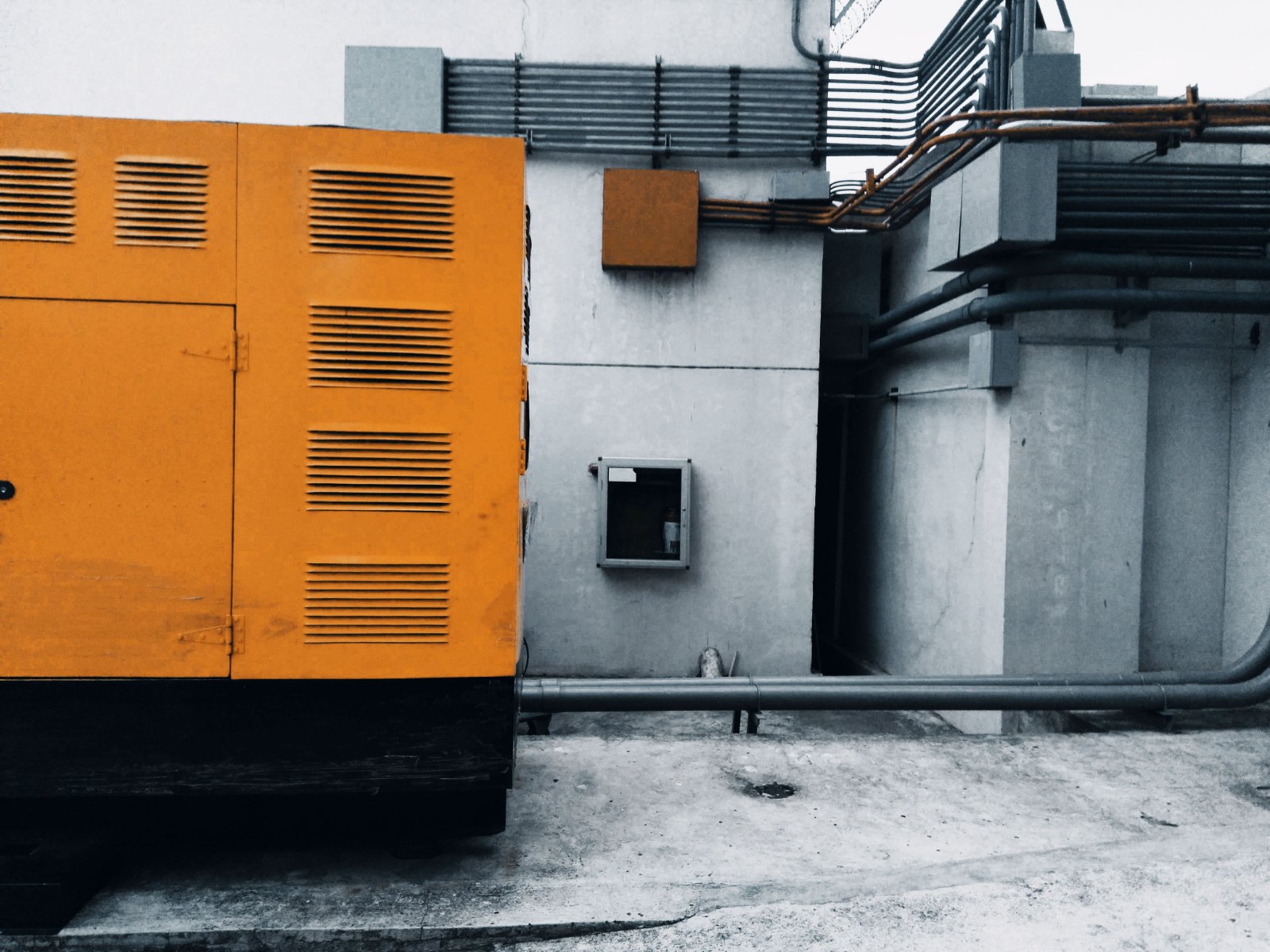
A generator is the most powerful of the available solutions for autonomous power supply, and at the same time the only one that can kill a person if used incorrectly. Therefore, I will start not with the specifications, but with safety, after which I will move on to calculating the required power and choosing the type.
The Most Important Thing: Where You Must Not Put a Generator
A generator is a source of exhaust gases that contain carbon monoxide, and installing it in enclosed spaces is strictly prohibited. This applies to basements, garages, houses, extensions, and any confined spaces. The key point is that an open window or gate does not make the space safe, since the concentration of carbon monoxide in an enclosed space can reach a deadly level within minutes. Carbon monoxide has no smell, color, or taste, so a person does not feel the poisoning. Drowsiness appears first, which is easy to mistake for fatigue, after which loss of consciousness occurs. The correct place is an open area or a well-ventilated shelter at least one and a half to two meters away from the windows and doors of the house. Also take the direction of the wind into account, since exhaust can be drawn back toward the house through ventilation.
The Second Critical Thing: Connection
Connecting a generator to the home network through an ordinary socket is a dangerous practice, sometimes called backfeeding. The risks here are twofold. First, there is a risk of electric shock for you. Second, and this is no less important, voltage goes back into the external network, creating a deadly danger for repair crews working on the line and considering it de-energized. The correct solution is to install a transfer switch that physically prevents simultaneous connection to the grid and the generator, and this should be done by an electrician. If such a solution is not available yet, the generator is used as a separate source to which appliances are connected directly with an extension cord of the appropriate power.
How to Calculate the Required Power
Add up the rated power of all appliances that will operate simultaneously. The power is indicated on the label of the appliance itself or in the manual. Then take starting currents into account, since appliances with electric motors and compressors consume three to seven times more than their rated power at startup. This applies to a refrigerator, circulation pump, well pump, washing machine, and any equipment with a motor. Add a reserve of twenty to thirty percent to the final figure, since a generator that constantly operates at its limit wears out faster and maintains voltage less effectively. A practical guideline for a private house with basic needs is from three to seven kilowatts, but the specific figure depends precisely on your list of appliances. The most common mistake is choosing a generator exactly according to the sum of the rated powers, after which it shuts down at the very first start of the refrigerator compressor.
Types of Generators
Gasoline generators are the most common choice for a house or country house. They are more affordable, start more easily in cold weather, and are available in a wide range of models. The disadvantages are higher fuel consumption compared with diesel, a shorter engine lifespan, which for household models is usually from one thousand to three thousand operating hours, as well as the fact that gasoline is less safe to store than diesel fuel. This is the optimal option for infrequent or seasonal use.
Diesel generators have a significantly longer engine lifespan, which in quality models reaches from three to ten thousand operating hours and more, and they are more economical during prolonged operation. They cost more and start worse in severe frost without heating. This is an option for long and regular outages.
Gas generators are more economical in operation and are usually considered as a stationary backup solution.
Inverter generators differ not by fuel, but by the way voltage is generated, and it is precisely they that provide a pure sine wave. In addition, they are quieter and more economical, since they automatically adjust the engine speed to the current load instead of constantly operating at maximum. The disadvantage is the higher price.
About the Gas Boiler
For modern gas boilers with electronic control, an inverter generator is the optimal choice, since the boiler's electronics are sensitive to voltage quality. If the budget does not allow it, you can consider a regular gasoline generator with an automatic voltage regulator, but the quality of the sine wave will still be worse, and therefore the risks to the boiler's electronics remain. Also take into account that the boiler consumes little power, usually from one hundred and fifty to three hundred watts, while together with the pump, peak consumption at startup reaches approximately nine hundred. That is, a powerful generator is not needed to power only the boiler, and here a power station often turns out to be a more advantageous solution.
Honestly About Apartments
Using a generator safely in an apartment is practically impossible. A balcony is not suitable, since it is a partially enclosed space, and exhaust enters the windows of your own apartment and those of your neighbors. A building entrance is not suitable for the same reasons and additionally creates a danger for all residents. A yard near the building creates problems with noise, the safety of the device itself, and fuel storage. For an apartment, the correct solution is a power station, which has no exhaust, makes no noise, and works indoors, and I wrote separately about how to choose one. A generator makes sense for a private house with its own property, where it can be installed outdoors at a safe distance.
About Fuel
Gasoline cannot be stored in residential premises, on balconies, or in basements. Use special canisters designed for fuel and keep them in a ventilated non-residential space. Refuel the generator only when the engine is switched off and cooled down. Remember the storage life of gasoline, since it loses its properties after several months, and in the engine this manifests itself as problems with starting.
Maintenance
A generator requires regular oil replacement according to the manufacturer's schedule, and neglecting this is the most common cause of premature failure. Start the device once every few weeks even when it is not needed, since prolonged inactivity without operation is no less harmful than intensive use. Keep a supply of oil, spark plugs, and filters, since during the season they may disappear from sale.
Sources
State Emergency Service of Ukraine, industry materials on backup power supply, publications by Atlant-M, AKUMULYATOR-Center