 YAPPIE
Why a Balcony Is Not Suitable
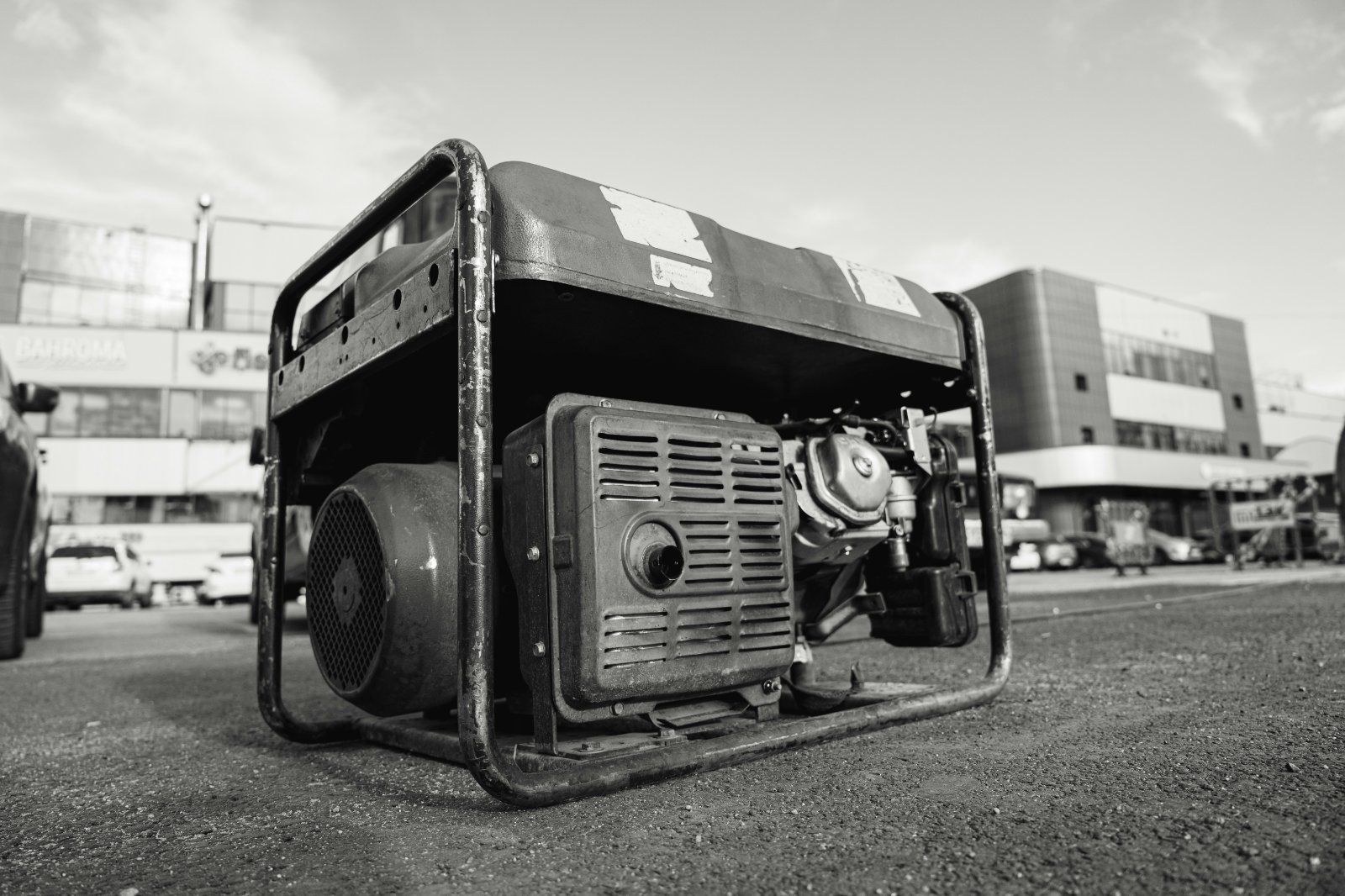
The most common argument sounds like this: a balcony is an open space, so the exhaust disperses. The State Emergency Service of Ukraine (DSNS) regulation looks different. A generator can only be used outdoors, and the distance from it to the nearest surface, that is, to a wall or window, must be at least six meters. If there is a solid wall without windows nearby, one meter is allowed.
A balcony does not meet these requirements under any circumstances, since it directly borders a residential space, and the windows are located right next to it. The second reason for this distance concerns not gas, but heat, since the generator becomes very hot during operation, and objects nearby can catch fire.
What Actually Happens
Carbon monoxide has no smell, color, or taste, so a person does not feel the poisoning.
It blocks oxygen from reaching the blood, causing drowsiness, which quickly progresses to loss of consciousness. This is why most deaths occur during sleep. A typical scenario looks like this. A generator is switched on on a balcony, the door from the balcony to the room remains open, the gas silently accumulates in the room, people fall asleep and do not wake up. In Kyiv, an entire family died in such a scenario, namely a young woman and her parents, and the results of the forensic medical examination confirmed carbon monoxide poisoning. Symptoms of poisoning include headache, dizziness, fatigue, difficulty breathing, dry cough, nausea, and loss of consciousness. The problem is that the first of these can easily be mistaken for ordinary fatigue in a cold apartment.
A Fact That Changes the Whole Picture
Here is what makes this problem not only a personal matter for the generator owner. Toxic gases spread through the building-wide ventilation ducts, meaning that exhaust from your balcony enters apartments that have nothing to do with it. In practice, this means that a generator on the second floor can cause the death of a family on the ninth floor that was simply sleeping at the time.
That is why having your own carbon monoxide detector does not solve the problem if a generator is operating in a neighbor's apartment.
About Responsibility
The legal consequences are also worth knowing. For simply switching on a generator in an improper location, a report with a small fine is usually issued, and there is a known case where, following a complaint from neighbors, the amount was seven hundred and fifty hryvnias. But the situation rarely ends there. If a fire or explosion occurs because of a generator or people are injured, criminal liability arises for violating fire safety requirements, and the punishment provides for restriction of liberty for up to three years, and in the presence of fatalities, up to eight years of imprisonment. If a person dies from carbon monoxide poisoning, the article on negligent homicide may apply. That is, this is not a minor administrative matter.
What to Do If a Neighbor Has Switched on a Generator
First, it is worth trying to talk to them, since a significant number of people simply do not know about the risk to other apartments through the ventilation system. If the conversation does not help, contact the condominium association (OSBB) or the management company, as well as the police, since a report is drawn up following such an appeal. If you smell exhaust in the apartment, have a headache or dizziness, immediately ventilate the room, go outside into fresh air, and call emergency services. A carbon monoxide detector is inexpensive and is a sensible purchase for a high-rise building with active neighbors, since it gives a signal when a person does not yet feel anything.
What Works for an Apartment Instead of a Generator
Now for the practical part, since the need for autonomous power does not disappear.
A portable power station is the main solution for an apartment, since it produces no exhaust, makes no noise, and operates directly inside the living space. I wrote separately about selecting power and capacity.
A power bank covers the most important things, namely a phone and router, and costs several times less than a power station.
Powering the router from a power bank keeps home internet running for many hours, since a router consumes approximately ten to twenty watts.
LED flashlights and lamps with built-in batteries solve the issue of lighting.
A thermos and a gas burner for reheating food work, but the burner should only be used for cooking in a small container and only in a ventilated room, not for heating.
Heat is provided by insulation, not electricity, since a heater consumes from one to two kilowatts and will discharge even a large power station within tens of minutes. I wrote separately about how to retain heat in an apartment.
Who a Generator Is Still Suitable For
If you live on the ground floor with your own exit to the yard, have a private house, or have access to a plot where you can maintain a distance of six meters from windows and doors, a generator becomes a workable option. In this case, the power calculation is made according to the standard scheme, that is, the rated power of the appliances that will operate simultaneously is added up, starting currents are taken into account for equipment with motors, which consume three to seven times more than the rated power at startup, and a reserve of twenty to thirty percent is added. For the basic needs of one apartment, this is usually two to three kilowatts, but the exact figure depends on your list of appliances. I wrote separately and in detail about choosing a generator and about connecting it correctly.
Sources
State Emergency Service of Ukraine (DSNS), publications by LB.ua, Radio Free Europe/Radio Liberty, ZAXID.NET, Kyiv.news, Telegraph