 YAPPIE
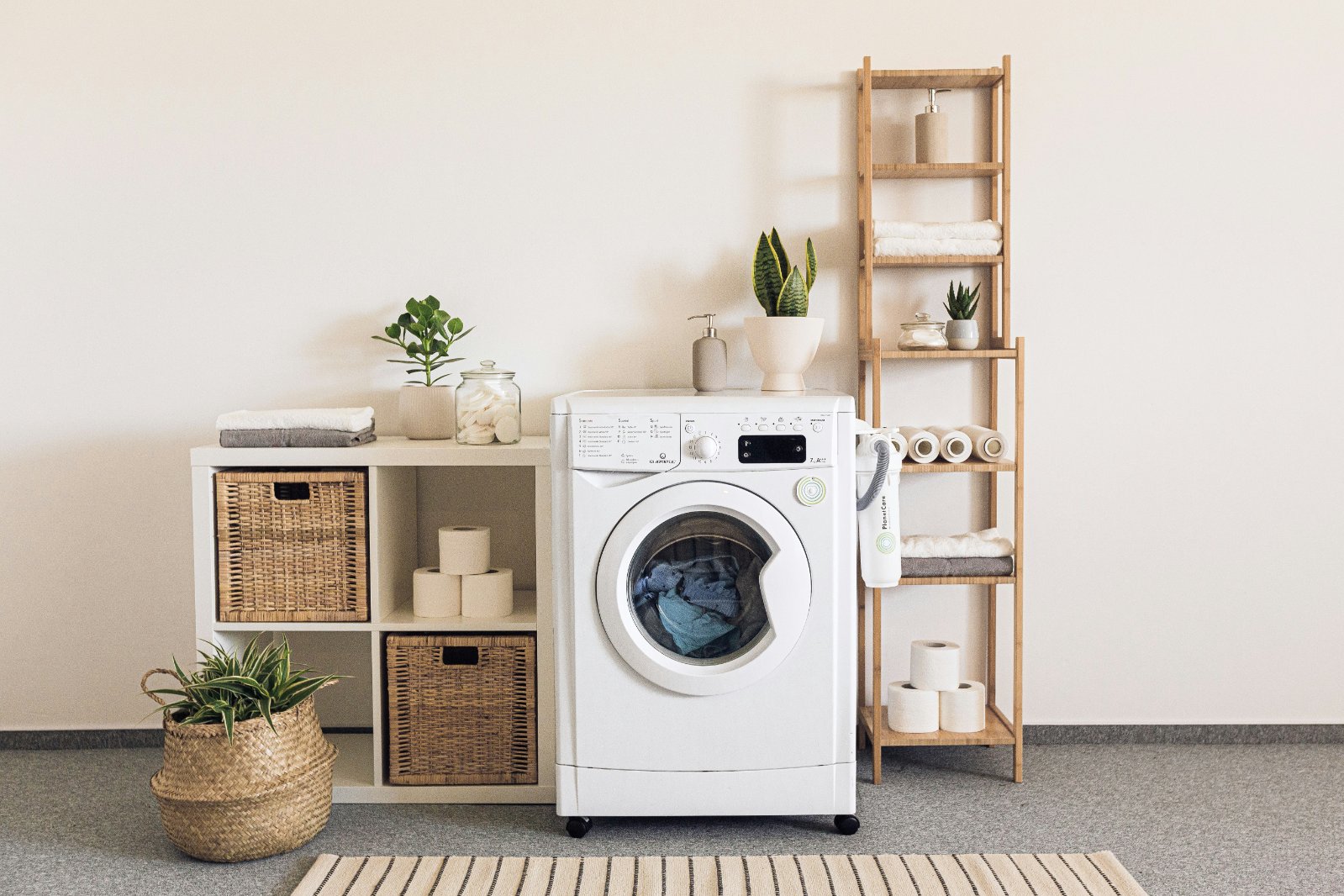
Washing machines are compared using a long list of classes and indicators, although some of them have long since lost their meaning, since technologies have become more similar between manufacturers. We will examine what really affects the result, and we will start with a characteristic that should simply be crossed off your list.
The Washing Class No Longer Means Anything
In the vast majority of modern models, it is marked with the letter A, since the technical level of drums, motors, and washing algorithms has become similar. The real difference in washing quality depends not on the class, but on the drum design, the operation of the electronics, temperature settings, and the correctly selected program. Therefore, it is not advisable to use this indicator as a key selection criterion, and the time spent comparing it between models is better directed toward other parameters.
Motor Type
This is a characteristic that really affects service life and comfort. A brushed motor is installed in most models and is the cheapest. Its advantages are compactness and price, while its disadvantages are higher noise, greater energy consumption, and the need for periodic replacement of graphite brushes. An inverter motor with direct drive is connected directly to the drum without a belt drive, which eliminates a source of vibrations associated with belt misalignment. Such machines are quieter, more economical, and according to manufacturers' estimates, last fifteen to twenty years, but belong to a more expensive segment. The practical conclusion is that for equipment bought for ten years or more and used several times a week, the inverter option is justified, and the price difference is spread over the entire service life.
Spin Class and Revolutions
Here it is worth understanding that more does not mean better. Eight hundred to one thousand revolutions per minute is enough for everyday washing, and the laundry remains moderately damp. One thousand two hundred is the optimal balance between the dryness of the clothes and fabric wear, and this range is suitable for most people. One thousand four hundred makes sense for dense fabrics and when you have a dryer, but it increases noise and vibrations. The downside of high revolutions is that clothes twist and press against the walls of the drum, which causes them to wrinkle heavily, while on synthetic fabrics the folds turn into creases. Small holes in the fabric also become larger. For wool, silk, and delicate fabrics, a spin speed of approximately five hundred revolutions is optimal, and this program should be available in the machine. In other words, maximum revolutions are not needed to always use them, but to have a reserve.
Loading Type
Front-loading machines are better balanced and therefore quieter during spinning, and they can be built under a countertop or the top surface can be used as a work surface. Top-loading machines have a drum fixed on both sides, which means the bearings are positioned at both ends, but the vibration level in them is higher due to their design features. They are convenient where there is not enough space to open the door forward.
The service life of both types is approximately the same, but the cost of repairs differs, and this is worth taking into account.
Capacity
The guideline depends not only on the number of people, but also on how often you do laundry. For one or two people, four to six kilograms is usually enough. For a family of three or four people, a comfortable range is six to eight. For a large family or when there is a need to wash bulky items, it is worth looking at eight kilograms or more. It is important to understand that the stated capacity refers to dry cotton, and for synthetic and delicate fabrics it is lower. Before buying, be sure to measure the installation space, including the space for opening the door and for connecting the hoses at the back.
Energy Efficiency Class
Since the machine spends most of its energy on heating water, this indicator noticeably affects the bill. You should look not only at the letter, but also at the specific energy and water consumption per cycle, since these figures allow you to calculate the cost of operation. The greatest impact, however, comes not from the machine itself, but from your choice of temperature, since switching from sixty degrees to thirty for a regular wash makes a noticeable difference.
Functions That Are Actually Useful
Delayed start allows you to start the cycle at the required time, and its practical value is discussed below.
Automatic laundry weighing adjusts water and energy consumption according to the actual load.
Leak protection is a function whose cost pays for itself with one activation. Half-load reduces the cycle when there are not many items. Drum cleaning extends the service life and removes odors. Functions such as smartphone control and voice control are a pleasant addition, but they do not affect washing quality.
What Is Important in Ukrainian Conditions
Here are several things that are not found in foreign reviews. Delayed start becomes a key function, rather than just a convenience. If you have a two-zone meter, you can move washing to the nighttime tariff, which is approximately twice as low. If you have power outage schedules, the same function can be used to start the cycle during a period when there is electricity. Washing from a portable power station is practically impossible. The machine consumes about two kilowatts during the water-heating stage, and even a large power station will discharge in a short time. Therefore, washing should be planned for periods with grid power, while the power station should be used for something else. What to do if the power goes out in the middle of a cycle. The machine will stop, and the water will remain in the tank. Most modern models continue the program from the same point after the power is restored. If there is no electricity for a long time, the water can be drained manually through the emergency filter at the bottom of the front panel by placing a low container underneath. Before doing this, make sure that the machine is disconnected from the power supply. Water pressure matters, since some models do not start filling with water when the pressure is low, and in high-rise buildings this happens on upper floors.
Sources
Comfy, Epicentr, MOYO blogs, industry materials on household appliances