 YAPPIE
Why Short Ventilation Does Not Cool Down an Apartment
The explanation lies in the difference in heat capacity. Air holds very little heat compared with walls, floors, furniture, and the radiators themselves. The main reserve of heat in your apartment is contained precisely in these massive objects, not in the air. When you open the window wide for a few minutes, the air is almost completely replaced, while the walls and furniture do not have enough time to cool down. After you close the window, they release their heat to the fresh air, and the room warms up quickly. This is the principle behind the German practice known as Stoßlüften, meaning short intensive ventilation, which is recommended by the German Federal Ministry for the Environment. In other words, you release humid and stale air outside while the heat remains in the building structures.
Why the Tilted-Window Mode Is Worse
Now about the opposite approach, which seems more cautious but actually causes more harm.
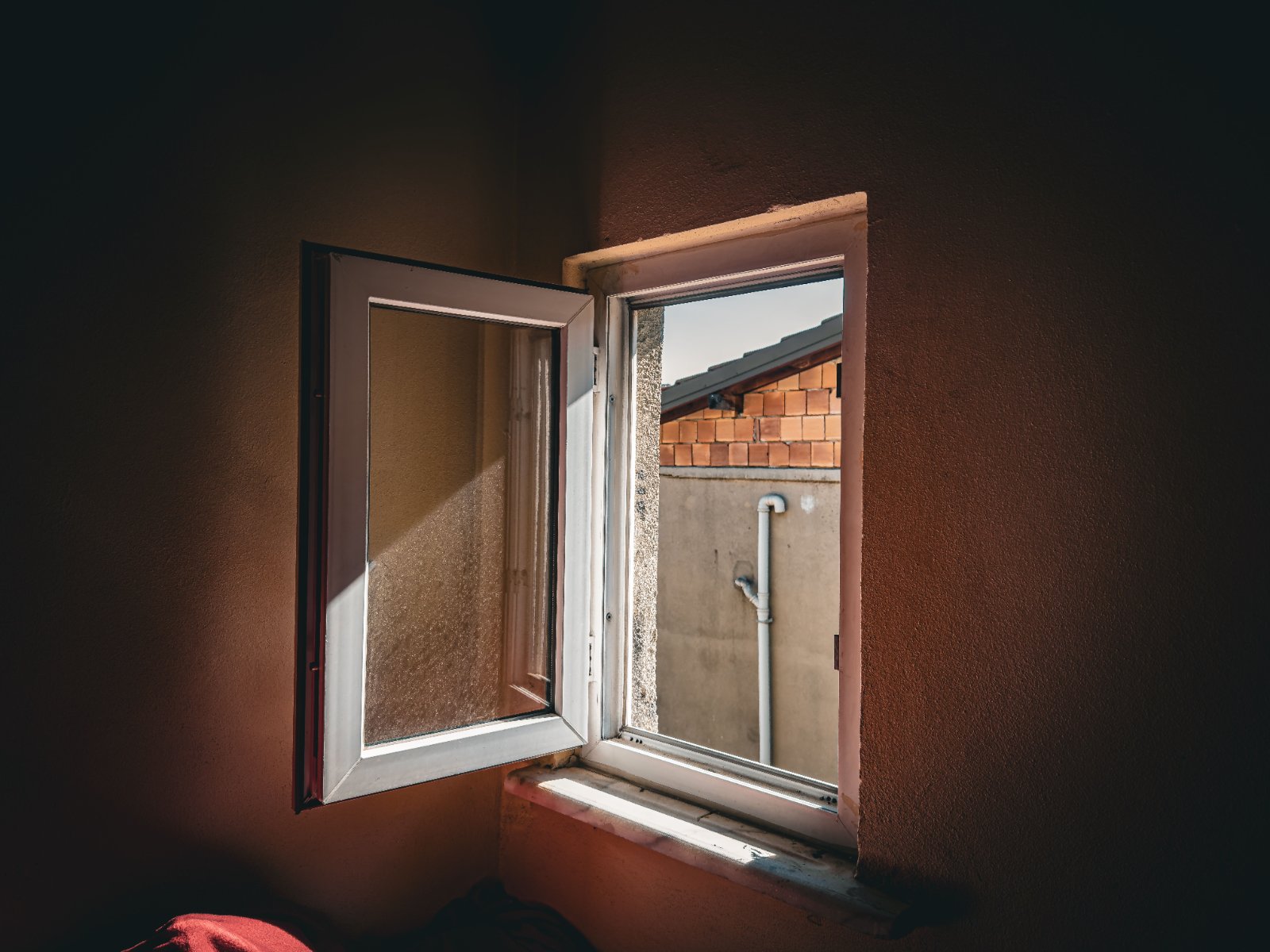
With prolonged ventilation through a narrow opening, the air changes slowly, while the walls, windowsill, and radiator near the window are constantly cooling down. As a result, condensation forms and the risk of mold increases precisely around the window. Worse still, the cooling occurs unevenly, so condensation can form inside the wall or windowsill material, which can eventually lead to deformation. In other words, the tilted-window mode wastes more heat and provides a worse air-exchange result.
How Many Minutes to Ventilate
The rule is simple: the lower the temperature outside and the stronger the wind, the less time is needed. The guidelines are roughly as follows. In severe frost, three to four minutes is enough. In ordinary winter weather, about five minutes is enough. In autumn and spring, longer ventilation is needed, approximately ten to fifteen minutes. In summer, the ventilation time is the longest. The main condition is that the windows should be opened fully during this time rather than left in the tilted ventilation position.
Cross-Ventilation
The fastest way to refresh the air is to open windows on opposite sides of the apartment at the same time and open the doors between the rooms. The resulting draft replaces a large volume of air within a matter of minutes, so with this method the ventilation time can be reduced even further. There are two precautions. You should not stay directly in the path of the airflow, and if the rooms have different temperatures, it is better not to leave the doors between them wide open for a long time.
What to Do Before Opening the Window
This is the detail that is most often overlooked. Turn down or reduce the heat output of the radiators in the room you are ventilating. The reason is that the thermostatic valve responds to the sudden drop in temperature and opens fully, meaning the system starts intensively heating the air that immediately escapes through the window. If you have individual heat metering, this directly affects your bill, as I wrote about in a separate article. After closing the window, return the radiator to its previous setting.
When Exactly to Ventilate
Immediately after waking up, because the bedroom accumulates the most carbon dioxide and moisture from breathing during the night.
During and after cooking, because the stove is one of the main sources of water vapor in an apartment. The extractor fan should also be running.
After taking a shower, ventilating the bathroom separately while keeping the doors to the living areas closed.
Before going to bed, because air quality directly affects sleep.
Immediately after condensation appears on the windows, because this is a signal of excessive humidity.
How Many Times a Day
The minimum is considered to be twice a day, while the recommended frequency is three to four times. You should ventilate more often when there are many people in the apartment, when you cook frequently, when you dry laundry indoors, or when there are many plants. You can also rely on objective measurements, since there are devices that measure the level of carbon dioxide indoors and indicate when it is time to ventilate. Signs that you have waited too long include a stuffy feeling, drowsiness, and difficulty concentrating.
Special Cases
A room with a child. During ventilation, the child should be taken out of the room and should return approximately ten to fifteen minutes after closing the window, once the temperature has recovered.
Humid weather outside. During dense fog or prolonged rain, prolonged ventilation is not advisable because you are letting dampness into the home instead of removing it. Reduce the ventilation time.
Rooms with high humidity. The kitchen and bathroom should be ventilated as needed rather than according to a schedule, meaning as soon as condensation appears.
What to Do When the Heating Is Not Working
Here the logic changes, and this should be taken into account during power outages. In a cold apartment, the walls and furniture no longer have a reserve of heat, so the temperature recovers slowly or does not recover at all after ventilation. However, you should not stop ventilating, because the moisture from breathing, cooking, and drying clothes will not disappear, and dampness in a cold room feels significantly worse than dry cold. The practical solution is to reduce ventilation to two or three minutes, use cross-ventilation for speed, and primarily ventilate the room that you are not using as the main living space. I wrote separately about how to organize a warm room.
What You Should Not Do
Do not leave windows tilted open for hours, as this is the main mistake in winter. Do not ventilate while the radiators are turned up to full power. Do not give up ventilation in order to save heat, because the result will be condensation, mold, and poorer well-being, while heat loss with the correct method is minimal. Do not try to compensate for the lack of ventilation solely with a humidifier or dehumidifier, because these devices work with humidity but do not replace the indoor air.
Sources
Recommendations of the Federal Ministry of the Environment of Germany regarding the practice of Stoßlüften in Channel 24, publications RBC-Ukraine, Vents-Shop, Ventoxx, Windows of Germany.